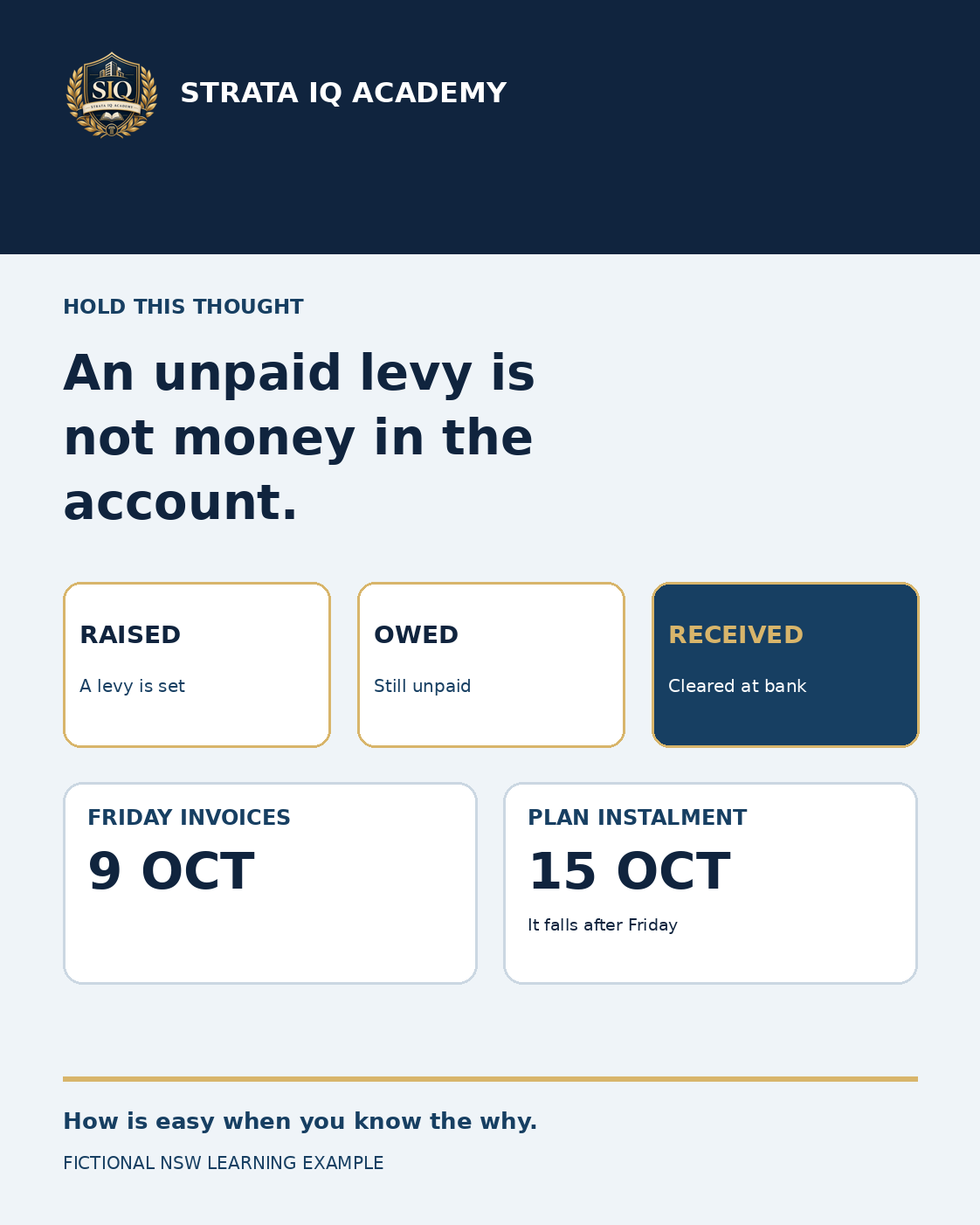
An unpaid levy is not money in the account.
Why a levy raised and a levy received are different numbers when a strata scheme faces bills today.
There are people on both sides of a strata cash-flow decision. An owner may be doing their best to keep an approved payment plan. A supplier expects to be paid. A volunteer committee sees levies raised and reasonably asks why the bank balance is tight.
The dates matter to everyone
In our fictional scheme, $21,000 in administrative levies is overdue. The first $3,000 instalment under an approved plan is scheduled for 15 October. Three invoices totalling $49,000 are due on 9 October.
The payment plan has its place. It does not bring the instalment forward by six days. Treating it as Friday's money would give the committee the wrong answer—and place unfair pressure on the owner.
Raised, owed and received are different steps.
The manager's job is to keep the dates visible, follow up arrears properly and help the committee deal with the bills in front of it. A correct levy ledger and a short cash forecast can both be true.
Before making a payment promise, show the committee what has cleared, what is owed and what is forecast to arrive later. Explain the difference plainly.
Hold this thoughtA correct levy ledger and a short cash forecast can both be true. What matters is whether we explain the difference before making a promise.
Fictional NSW training example. NSW Government levy and payment-plan guidance checked 28 September 2026. Confirm current guidance and scheme-specific records before a real decision.
Turn the explanation into practice.
Open the linked Guide or Academy pathway when you need the complete checks, official sources and practical learning.