Your Strata Levies Just Jumped 40%. Is That Even Legal?
A dramatic levy increase can be concerning, but the percentage alone does not determine its legality. Here's what NSW owners should check before making a decision.
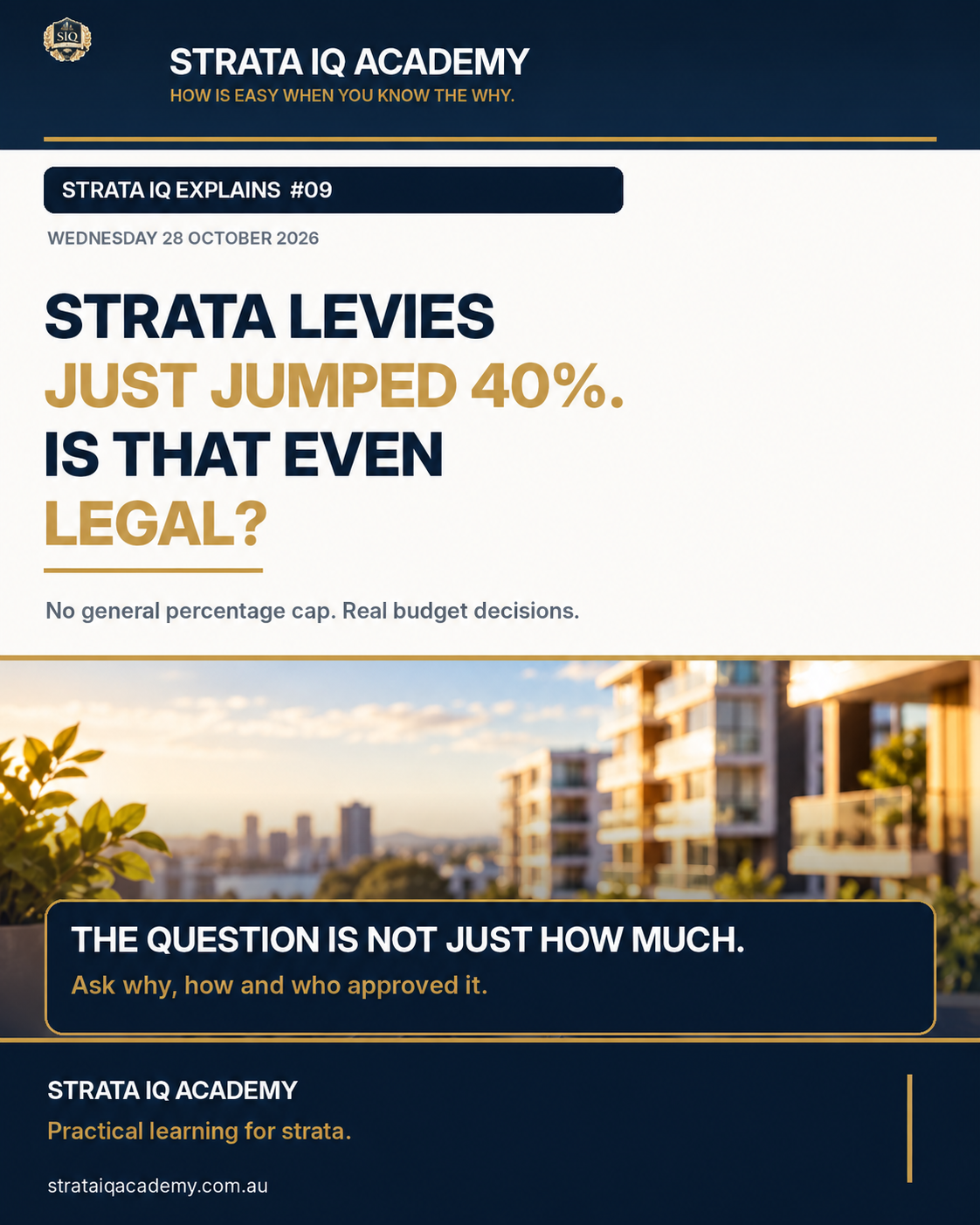
Illustrative scenario — the 40% increase is not a report about a particular scheme.
Imagine receiving an AGM budget showing a 40% increase in your annual strata levies. You may be shocked. You might wonder whether the strata manager can simply impose such a large increase.
The important distinction is that NSW does not generally set a statutory percentage cap on ordinary strata levy increases. A 40% increase is not automatically unlawful merely because it is large. Equally, a major increase deserves a clear budget explanation and the correct Owners Corporation approval process.
Who determines the levy?
The Owners Corporation approves the budget and levy contributions at a general meeting, ordinarily the AGM. The strata manager may help prepare figures or provide advice but does not unilaterally set the levy amounts.
Levies are based on the scheme's expenses and funding requirements and generally allocated to lots by unit entitlement, subject to the applicable statutory exceptions.
Why could levies rise so much?
A large increase can reflect rising building insurance costs, utilities or contractor fees; an ageing building; previously deferred repairs; significant capital works contributions; a prior budget that was set too low; or changes to essential compliance and maintenance costs.
But an increase can also warrant closer questioning where figures are unexplained, costs appear duplicated or there is no transparent financial plan.
Five questions to ask before voting
- What changed since last year's budget? Request a line-by-line explanation of significant movements.
- Which expenditure is essential, and which is discretionary? Separate operating costs, planned maintenance and optional projects.
- What does the capital works plan forecast? A small levy now can create a much larger special levy later.
- What is the cash-flow position? A budgeted levy is not necessarily cash already collected, and fund balances and commitments matter.
- What are the decision and payment arrangements? Check the meeting motions, unit entitlements and applicable levy notice periods.
The STRATA IQ takeaway
The better question is not simply, “Why did levies increase by 40%?” It is, “Does the proposed budget accurately reflect what the scheme needs — and can the Owners Corporation explain why?”
Low levies are not always good governance. High levies are not automatically bad governance. Clear evidence, long-term planning and properly authorised decisions matter more than a headline percentage.
STRATA IQ AcademyHow is easy when you know the why.
NSW Government guidance and the cited industry commentary reviewed 25 October 2026. Direct retrieval of the current Act was unavailable for this review; the legislation itself has not been independently rechecked in full. STRATA IQ Academy is an independent education provider and does not represent a government entity. General NSW strata education, not legal advice. Check current legislation, scheme records and the authority for the particular decision. The 40% figure is illustrative. General information, not financial advice.
Turn the explanation into practice.
Open the linked Guide or Academy pathway when you need the complete checks, official sources and practical learning.