64% of Strata Owners Want More Communication. Do They Really Want More Emails?
The 2026 CHU Strata Index found that 64% of strata owners would prefer more frequent communication. The practical question is whether owners need more messages—or better visibility.
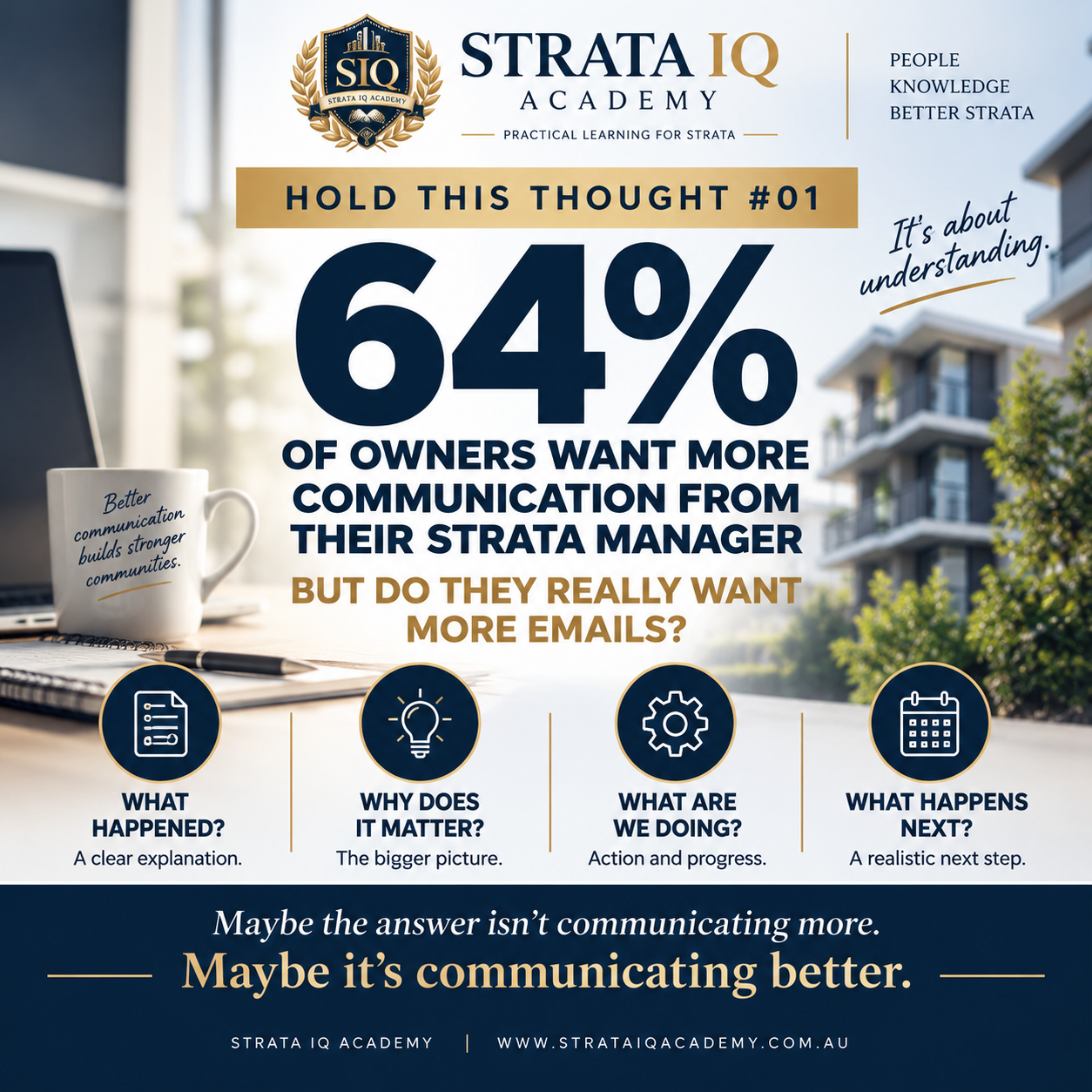
The 2026 CHU Strata Index, based on research involving 1,000 Australian strata owners, found that 64% would prefer more frequent or somewhat more frequent communication from their strata manager. At first glance, the answer might seem simple: send more emails. But the more useful question is what owners are actually asking to see.
Silence can hide substantial work.
A strata manager may be coordinating contractors, engineers, insurers, committee members and other parties. Quotes may be under review, inspections may be arranged and advice may be awaited.
A great deal can be happening behind the scenes. But if the owner receives no useful update, they may reasonably feel that nothing is happening.
The gap is often not between action and inaction. It is between the work being done and the visibility the owner receives.
Useful visibility answers four questions.
A useful update does not need to be long. It should help the reader understand the current position and what to expect.
- What happened?
- Why does it matter?
- What are we doing about it?
- What happens next?
Different owners need different communication.
Some owners want detailed context, documents and the reasoning behind a recommendation. Others want reassurance that the matter is being managed and a clear date for the next update.
Good communication adapts to the audience without changing the facts. It gives enough information to reduce uncertainty, supports informed decisions and avoids creating more noise than clarity.
That is not criticism of owners or strata managers. It is a practical reminder that visible, reliable communication helps both groups work together with greater confidence.
Communication is most useful when it makes progress visible.
More messages do not automatically create greater confidence. A timely update that explains the position, the work underway and the next commitment can be more valuable than several emails that do not answer the reader's practical questions.
Before sending the next update, check that it answers four questions: what happened, why it matters, what is being done and when the next update will arrive. Then adjust the level of detail for the people receiving it.
Hold this thoughtMaybe the answer isn't communicating more. Maybe it's communicating better.
Source: CHU — 2026 Strata Index ↗
Turn the explanation into practice.
Open the linked Guide or Academy pathway when you need the complete checks, official sources and practical learning.