The Wet Ceiling Does Not Tell You Who Pays
A wet ceiling shows where water appeared. It does not, by itself, identify the source, failed component or repair responsibility.
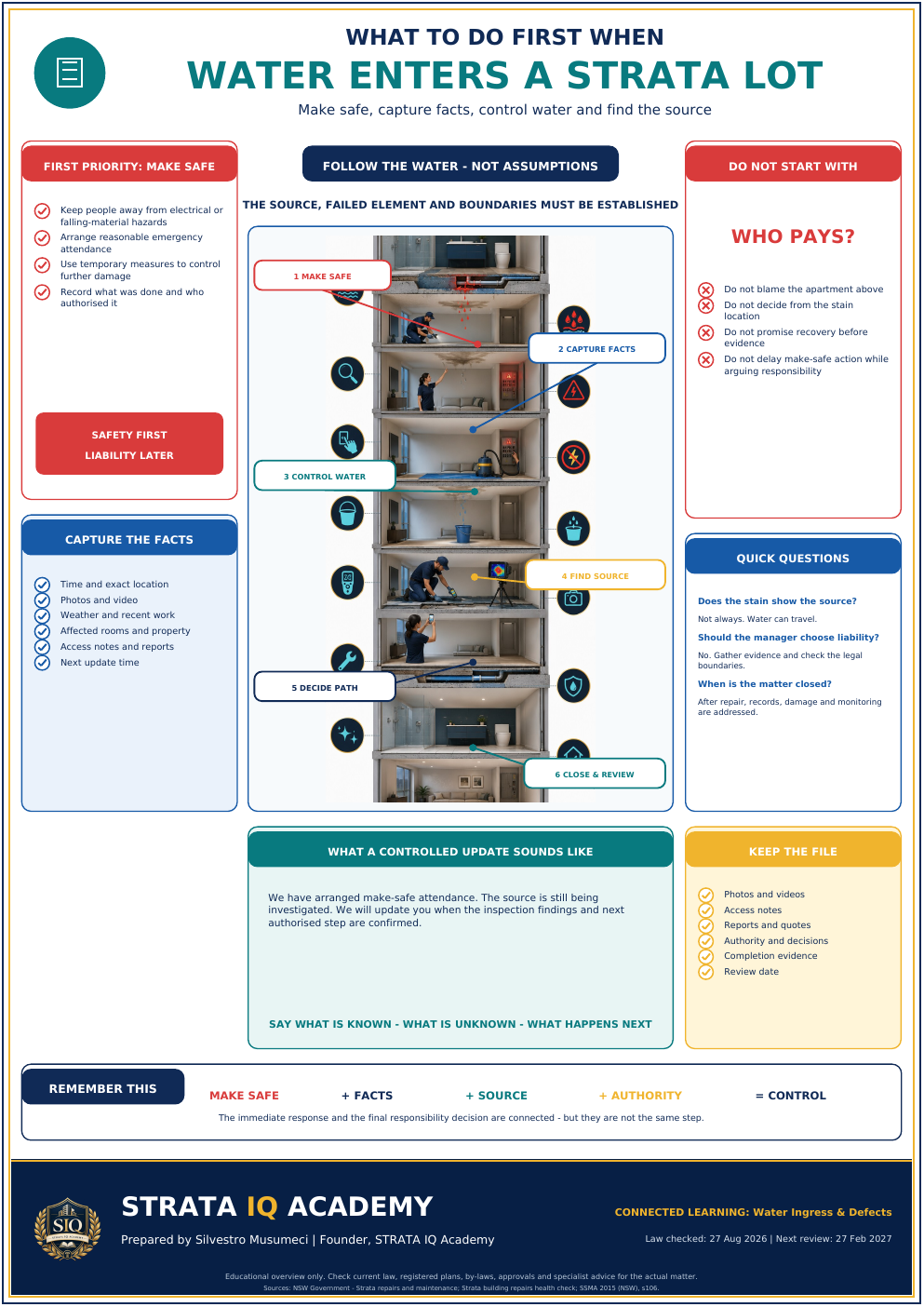
A resident reports water coming through the ceiling. The first instinct is often to ask whether the upstairs owner or the owners corporation must pay. That is an important question, but it is not the first one.
Control the immediate risk first.
Water near electricity, ceilings or shared access may need urgent licensed attendance. Record the damage, preserve evidence and arrange the right investigation within authority.
Mitigation is not an admission of liability. It prevents an uncertain responsibility question from becoming a larger safety or damage problem.
Then find the source.
A wet ceiling might result from an owner's fixture or appliance. It might also involve waterproofing, a slab, a boundary-wall pipe, a roof or another part of common property. The place where water appears does not prove what failed.
Only after the cause is reasonably established should the strata plan, registered by-laws, renovation approvals and maintenance history be used to assess repair responsibility.
Keep insurance separate.
A policy may respond to resulting damage, subject to its terms, but it does not replace the need to repair the source or automatically decide liability.
Visible damage is evidence of impact—not proof of responsibility.
Premature conclusions can delay urgent action, confuse repair and insurance responsibilities and weaken trust. A disciplined sequence protects people and property while preserving a fair evidence-based decision.
Ask the attending contractor to state in writing what failed, where it is located, what testing supports the conclusion and what temporary and permanent work is recommended.
STRATA IQ answerFind the source before deciding responsibility. How is easy when you know the why.
Turn the explanation into practice.
Open the linked Guide or Academy pathway when you need the complete checks, official sources and practical learning.