When Does a Recurring Repair Become a Building-Wide Problem?
A fourth pressure-reducing valve has failed after a major water-damage claim. Would you approve another repair—or investigate the building?
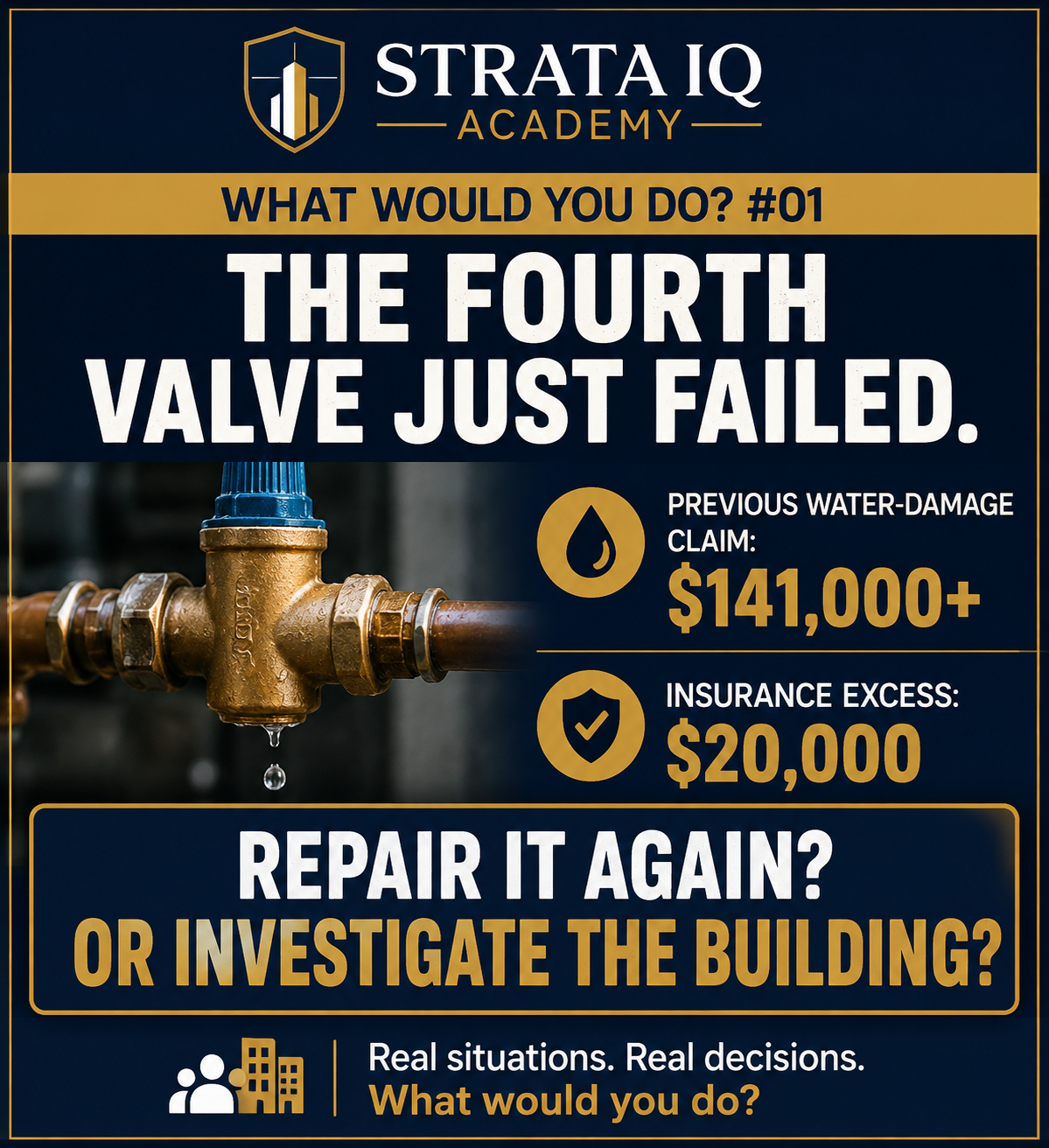
A pressure reducing valve bursts in a strata building. Water damage follows. It gets repaired. Then another valve fails. Then another. And another. Each time, the immediate problem is dealt with. But now the building has experienced a water-damage claim exceeding $141,000, with a $20,000 insurance excess. You're on the strata committee. Another valve has just failed. What would you do?
Which option would you choose?
- AApprove the repair and move on
- BAsk the plumber to replace similar valves as they fail
- CStop treating each failure separately and investigate whether there is a building-wide problem
- DLodge the insurance claim and leave the investigation to the insurer
Choose your response before opening the practical explanation.
Reveal the practical explanation
Repeated failures may be symptoms of one systemic problem.
The immediate failure still needs to be isolated, made safe, repaired within proper authority and notified to the insurer or broker where required. Choosing C does not mean leaving the current incident unattended.
The wider question is whether four similar failures are being treated as separate repairs when they may point to one installation, design, access, maintenance or component issue across the building.
In the CHU case behind this scenario, the property contained hundreds of pressure-reducing valves. An investigation identified valves installed upside down in ceiling voids as the likely cause of repeated failures. The building was more than five years old and the valve warranties had expired.
Insurance may respond to resulting insured damage, subject to the policy, but it should not be assumed to fund the correction of defective installation, wear and tear or maintenance. The policy position and insurer advice must be checked for the particular building.
The fourth similar failure is information—not just another repair request.
A recurring-failure pattern can expose an owners corporation to repeated damage, excess payments, disruption and increasing insurance risk. A committee needs enough evidence to decide whether a broader inspection, maintenance or replacement program is required.
Create a simple failure register showing the valve location, date, component type, installation position, cause, damage, repair and cost. Ask a suitably qualified plumber or hydraulic consultant whether a representative inspection and building-wide risk assessment are warranted.
What would you do?At what point would you stop treating repeated failures as isolated incidents and place a building-wide investigation before the committee?
Source: CHU — Resilience in Practice: Pressure Reducing Valves Risk ↗
Turn the explanation into practice.
Open the linked Guide or Academy pathway when you need the complete checks, official sources and practical learning.